Efficient Methods for Carbon Dioxide Capture in Industrial Settings
As global industries strive to mitigate their environmental impact, capturing carbon dioxide (CO2) emissions has become a pivotal focus. Industrial settings, often significant sources of CO2, are implementing various methods to capture and utilize this greenhouse gas effectively. Understanding the different technologies and strategies available for carbon dioxide capture can help industries reduce their carbon footprint and contribute to a more sustainable future.
Understanding Carbon Capture Technologies
Carbon capture technologies are diverse, each with unique applications and efficiencies. These technologies are essential for reducing emissions in industrial contexts, particularly in sectors like power generation, cement production, and chemical manufacturing.
Post-Combustion Capture
Post-combustion capture involves removing CO2 from flue gases after fossil fuels have been burnt. This method is advantageous due to its ability to be retrofitted to existing plants.
- Utilizes chemical solvents, such as amines, to absorb CO2.
- Can be integrated with existing industrial infrastructure.
- Has a high capture efficiency, making it suitable for power plants.
Pre-Combustion Capture
Pre-combustion capture involves converting fuel into a mixture of hydrogen and CO2 before combustion. This method is often used in industrial processes like gasification.
- Involves the conversion of natural gas or coal into syngas.
- Efficient for industries that utilize hydrogen as a fuel source.
- Enables the capture of CO2 before the combustion process, enhancing efficiency.
Emerging Technologies in Carbon Capture
With advancements in technology, new methods of capturing CO2 are continually being developed. These innovations promise greater efficiencies and broader applicability across various industries.
Direct Air Capture
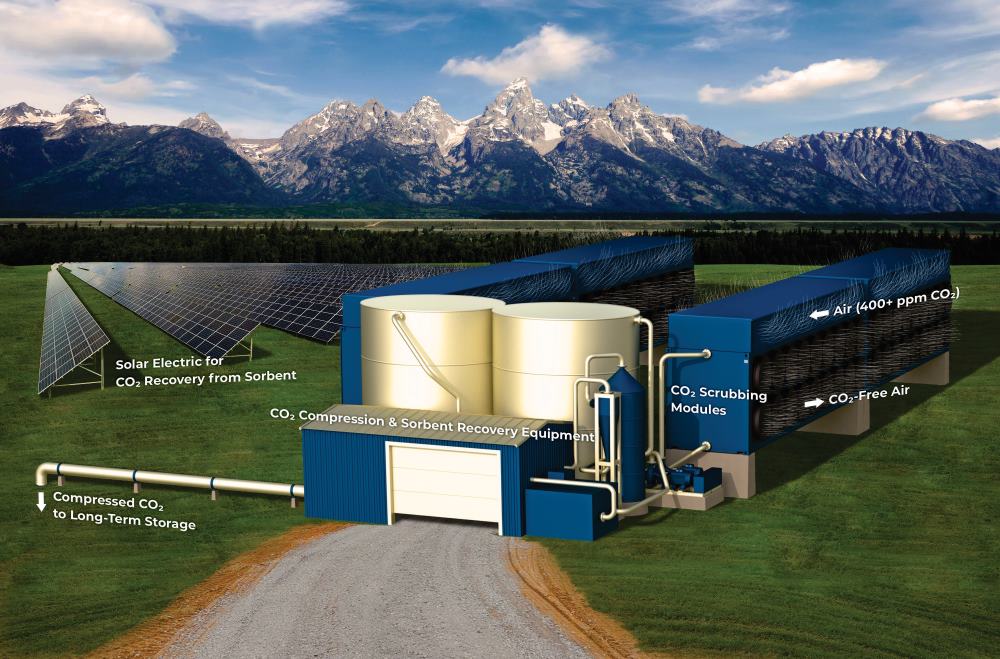
Direct air capture (DAC) technology is an innovative approach that captures CO2 directly from the ambient air.
- Utilizes chemical reactions to capture CO2 from the atmosphere.
- Can be deployed in any location, offering great flexibility.
- Potential to significantly reduce global CO2 levels if implemented widely.
Membrane Technologies
Membrane-based carbon capture employs selective permeability to separate CO2 from other gases.
- Offers a compact and efficient method for CO2 separation.
- Scalable and adaptable to various industrial applications.
- Continual advancements are improving selectivity and reducing costs.
The Role of Industry and Policy in Carbon Capture
While technological advancements are crucial, policy frameworks and industry collaboration are equally important in the widespread adoption of carbon capture solutions.
Strategic policies and incentives can facilitate the deployment of carbon capture technologies by reducing financial barriers and encouraging innovation. Collaboration among industries is essential for sharing best practices and scaling successful technologies across different sectors.
In conclusion, the integration of carbon dioxide capture technologies into industrial settings is essential for reducing CO2 emissions and combating climate change. By leveraging both existing and emerging technologies, industries can achieve significant environmental benefits while maintaining operational efficiency. These efforts, supported by robust policy measures and industry cooperation, will be vital in driving the transition towards a more sustainable future.
